How to optimize the grating parameters for maximum performance of reflective holographic gratings?
As a provider of reflective holographic gratings, I understand the critical role that these components play in a variety of optical systems. Reflective holographic gratings are widely used in spectroscopy, lasers, and other photonics applications, and achieving their maximum performance is essential for the success of these systems. In this blog post, I will share some insights on how to optimize the grating parameters to enhance the performance of reflective holographic gratings. Reflective Holographic Gratings

Understanding Reflective Holographic Gratings
Before delving into the optimization of grating parameters, it is important to have a basic understanding of reflective holographic gratings. These gratings are created using holographic techniques, where an interference pattern is recorded on a photosensitive material. When light is incident on the grating, it diffracts according to the grating’s periodic structure, producing a spectrum of wavelengths.
The performance of a reflective holographic grating is characterized by several key parameters, including diffraction efficiency, spectral resolution, and stray light. Diffraction efficiency refers to the ratio of the diffracted light intensity to the incident light intensity, and a high diffraction efficiency is desirable to maximize the amount of light that is diffracted into the desired order. Spectral resolution is the ability of the grating to separate closely spaced wavelengths, and a higher resolution is required for applications such as high-resolution spectroscopy. Stray light, on the other hand, is unwanted light that is scattered or diffracted into regions outside of the desired diffraction order, and minimizing stray light is crucial for accurate measurements.
Key Grating Parameters for Optimization
Groove Density
The groove density, also known as the ruling frequency, is one of the most important parameters in a reflective holographic grating. It is defined as the number of grooves per unit length, typically measured in lines per millimeter (l/mm). The groove density determines the angular dispersion of the grating, which is the rate at which the diffracted angle changes with wavelength. A higher groove density results in a larger angular dispersion, which can improve the spectral resolution of the grating.
However, increasing the groove density also has some limitations. As the groove density increases, the diffraction efficiency may decrease, especially at longer wavelengths. This is because the grooves become narrower and shallower, which can lead to increased scattering and absorption of light. Additionally, high groove density gratings are more difficult to manufacture, and they may be more sensitive to surface imperfections and environmental factors.
Therefore, when optimizing the groove density, it is necessary to balance the requirements for spectral resolution and diffraction efficiency. For applications that require high spectral resolution, such as high-end spectroscopy, a higher groove density (e.g., 1800 l/mm or more) may be preferred. For applications where diffraction efficiency is more important, such as laser systems, a lower groove density (e.g., 600 – 1200 l/mm) may be more suitable.
Groove Profile
The groove profile of a reflective holographic grating also has a significant impact on its performance. The shape of the grooves can affect the diffraction efficiency, polarization dependence, and stray light characteristics of the grating. Commonly used groove profiles include sinusoidal, triangular, and blazed profiles.
A sinusoidal groove profile is the simplest and most commonly used profile in holographic gratings. It provides a relatively uniform diffraction efficiency over a wide wavelength range and is less sensitive to polarization. However, the diffraction efficiency of a sinusoidal profile is typically lower compared to other profiles, especially in the first diffraction order.
Triangular and blazed profiles are designed to enhance the diffraction efficiency in a specific diffraction order. A blazed grating has a sawtooth-shaped groove profile, and by optimizing the blaze angle, the maximum diffraction efficiency can be achieved in a particular order. Blazed gratings are widely used in applications where high diffraction efficiency is required, such as monochromators and spectrometers.
When choosing the groove profile, it is important to consider the specific requirements of the application. For applications that require high diffraction efficiency in a single order, a blazed grating may be the best choice. For applications that require a more uniform response over a wide wavelength range, a sinusoidal or triangular profile may be more appropriate.
Substrate Material and Surface Quality
The substrate material of a reflective holographic grating can affect its mechanical stability, thermal properties, and optical performance. Common substrate materials include glass, fused silica, and silicon. Glass substrates are widely used due to their low cost, good optical transparency, and ease of processing. Fused silica substrates have excellent thermal stability and low thermal expansion coefficient, making them suitable for applications that require high temperature stability. Silicon substrates are often used in semiconductor-based photonics applications.
In addition to the substrate material, the surface quality of the grating is also crucial for its performance. A smooth and flat surface can reduce scattering and improve the diffraction efficiency of the grating. Any surface imperfections, such as scratches, pits, or roughness, can cause stray light and degrade the performance of the grating. Therefore, it is important to use high-quality substrate materials and to ensure that the surface of the grating is properly polished and cleaned during the manufacturing process.
Coating
Applying a coating to the surface of a reflective holographic grating can further enhance its performance. The coating can improve the reflectivity of the grating, reduce absorption and scattering, and protect the grating from environmental damage. Common coating materials include aluminum, gold, and dielectric coatings.
Aluminum coatings are widely used due to their high reflectivity in the visible and ultraviolet regions. Gold coatings have excellent reflectivity in the infrared region, and they are often used in infrared spectroscopy applications. Dielectric coatings can provide high reflectivity over a specific wavelength range and can be designed to have low absorption and scattering.
When selecting a coating, it is important to consider the wavelength range of the application, the required reflectivity, and the environmental conditions. The coating should be carefully applied to ensure a uniform and smooth surface, as any coating defects can also affect the performance of the grating.
Optimization Techniques
Simulation and Modeling
One of the most effective ways to optimize the grating parameters is through simulation and modeling. There are several software tools available that can simulate the diffraction behavior of reflective holographic gratings based on the input parameters such as groove density, groove profile, and coating properties. These simulations can provide valuable insights into the performance of the grating, such as diffraction efficiency, spectral resolution, and stray light, and can help to optimize the parameters before the actual manufacturing process.
By using simulation and modeling, we can quickly evaluate different parameter combinations and identify the optimal values for a specific application. This can save time and cost in the development process and can ensure that the final product meets the performance requirements.
Experimental Testing and Iteration
In addition to simulation and modeling, experimental testing is also essential for optimizing the grating parameters. After the initial design and fabrication of the grating, it is necessary to test its performance using appropriate optical measurement techniques, such as spectrophotometry and interferometry. These tests can provide accurate data on the diffraction efficiency, spectral resolution, and stray light of the grating, and can be used to validate the simulation results.
Based on the experimental results, we can make adjustments to the grating parameters and repeat the manufacturing and testing process until the desired performance is achieved. This iterative approach allows us to fine-tune the parameters and to optimize the performance of the grating in a real-world environment.
Conclusion
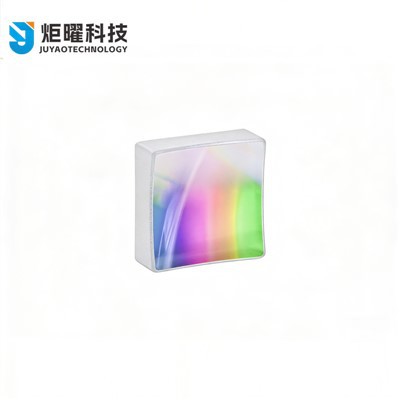
Optimizing the grating parameters for maximum performance of reflective holographic gratings is a complex but essential task. By carefully considering the key parameters such as groove density, groove profile, substrate material, surface quality, and coating, and by using simulation and experimental testing techniques, we can achieve high diffraction efficiency, spectral resolution, and low stray light in the gratings.
Plane Ruled Grating As a reflective holographic gratings provider, I am committed to working with our customers to understand their specific requirements and to optimize the grating parameters to meet their needs. If you are interested in our reflective holographic gratings or have any questions about grating optimization, please feel free to contact us for further discussion and procurement negotiation.
References
- Born, M., & Wolf, E. (1999). Principles of Optics: Electromagnetic Theory of Propagation, Interference and Diffraction of Light. Cambridge University Press.
- Loewen, E. G., & Popov, E. (1997). Diffraction Gratings and Applications. Marcel Dekker.
- Hutley, M. C. (1982). Diffraction Gratings. Academic Press.
Jilin Juyao Technology Co., Ltd.
As one of the leading reflective holographic gratings manufacturers and suppliers in China, we offer a wide range of products with superior quality. Please feel free to wholesale customized reflective holographic gratings from our factory. Welcome to view our website for more information.
Address: Room 101, No. 2 Huiwen Road, Nanguan District, Changchun City, Jilin Province, China
E-mail: jyoptix@outlook.com
WebSite: https://www.jyoptix.com/
