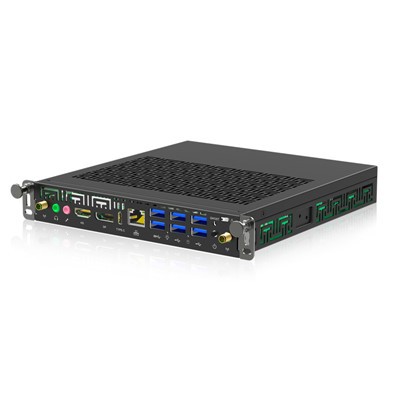
In the dynamic world of computer hardware, ITX motherboards have carved out a niche for themselves, celebrated for their compact size and suitability for small – form – factor builds. As a supplier of ITX motherboards, I’ve witnessed firsthand the growing enthusiasm for these pint – sized powerhouses. However, like any product, they are not without their drawbacks. In this blog, I’ll delve into the disadvantages of ITX motherboards, providing a balanced perspective to help potential buyers make informed decisions. ITX Motherboard
Limited Expansion Options
One of the most significant limitations of ITX motherboards is their restricted expansion capabilities. Due to their small form factor, typically measuring 170mm x 170mm, there’s simply not as much room for additional components as with larger motherboards such as ATX or E – ATX.
Most ITX motherboards come with only one or two PCIe slots. This means that if you want to expand your system by adding multiple graphics cards for SLI or CrossFire setups, a dedicated sound card, or an additional network card, you’ll quickly run into problems. For gamers or content creators who rely on dual – GPU configurations to achieve high – end gaming performance or accelerate rendering tasks, the lack of available PCIe slots on an ITX motherboard can be a deal – breaker.
In addition to PCIe slots, the number of SATA ports on ITX motherboards is often limited. While a couple of ports may be sufficient for basic storage needs, users who require multiple hard drives or SSDs for large – scale storage projects, like video editing or data archiving, will find the constraints restrictive. You may find yourself having to choose between internal storage expansion and other add – on cards, creating a difficult trade – off.
Cooling Challenges
Another disadvantage of ITX motherboards is the difficulty in implementing effective cooling solutions. The compact nature of ITX cases, which are designed to house these motherboards, leaves little space for large – scale cooling components.
Heat sinks and fans on ITX motherboards tend to be smaller compared to those on larger motherboards. Smaller heatsinks have less surface area available for heat dissipation, and smaller fans may not be able to move as much air. This can lead to higher operating temperatures, especially under heavy loads. For example, during intense gaming sessions or while running CPU – or GPU – intensive applications, the limited cooling capacity of an ITX system can cause thermal throttling. Thermal throttling occurs when the CPU or GPU reduces its performance to prevent overheating, which can result in a significant drop in system performance.
Liquid cooling can be an option to address the cooling issue, but it also presents its own challenges in an ITX build. Installing a liquid cooling system in a small ITX case requires careful planning and often involves custom – made components. The cost of implementing a liquid cooling solution can be significantly higher, and there’s also a greater risk of leaks, which can damage the motherboard and other components.
Power Delivery Constraints
ITX motherboards often have power delivery limitations compared to their larger counterparts. The smaller physical size means there is less space for power – related components such as voltage regulators and capacitors.
These power delivery components are crucial for providing stable and clean power to the CPU and other components. Without sufficient power delivery, the motherboard may not be able to support high – end processors and graphics cards at their full potential. For instance, a high – end CPU may require a large amount of power to operate at its maximum clock speed and performance levels. If the ITX motherboard’s power delivery system is unable to meet these requirements, the CPU may experience instability, crashes, or reduced performance.
Moreover, overclocking, which is the process of increasing a component’s clock speed beyond its factory – set limits, becomes more challenging on ITX motherboards. The power delivery limitations can make it difficult to provide the extra power needed for overclocking, and the limited cooling capacity also makes it harder to dissipate the additional heat generated by overclocking.
Component Compatibility
Component compatibility can be a headache when using ITX motherboards. The small form factor restricts the size of components that can be installed. For example, when it comes to RAM, some high – end memory modules with large heat spreaders may not fit properly in the limited space between the CPU cooler and the RAM slots on an ITX motherboard.
Graphics cards also pose a compatibility issue. Due to the small size of ITX cases, there may not be enough room for large, high – end graphics cards. Many modern graphics cards are designed with large coolers and multiple fans, which can exceed the available space in an ITX case. Even if the GPU can physically fit, there may not be enough airflow to keep it cool, leading to performance degradation.
In addition, some specialized components such as certain types of expansion cards or custom – made peripherals may not be compatible with ITX motherboards due to their unique form factors or power requirements.
Cost and Availability of Components
Building an ITX system can be more expensive than building a traditional ATX or E – ATX system. The limited availability of ITX – specific components often drives up the cost. Manufacturers produce fewer ITX – compatible parts, and the cost of research, development, and production for these smaller – sized components can be relatively high.
For example, ITX cases are generally more expensive than larger cases because they require more precise engineering to fit all the components in a small space. The same goes for ITX – specific power supplies, which need to be compact while still providing sufficient power. These specialized power supplies often come with a higher price tag.
In terms of availability, finding ITX – compatible components can be a challenge. Unlike more common ATX components, which are widely available in most computer stores, ITX parts may have to be ordered online, and there may be longer waiting times for delivery. This can be frustrating for users who want to quickly assemble their systems.
Thermal Design and Noise
Given the cooling challenges mentioned earlier, the thermal design of ITX systems often leads to higher noise levels. To compensate for the limited cooling capacity, fans may need to spin at higher speeds to move more air. This increased fan speed results in louder noise, which can be a nuisance for users, especially those who value a quiet computing environment.
Even with careful fan placement and selection, achieving a silent ITX build is extremely difficult. The confined space within an ITX case means that sound waves are more likely to bounce around and amplify, creating a more noticeable and potentially distracting noise level.
Conclusion
While ITX motherboards offer numerous advantages, including their small size and portability, they are not without their fair share of disadvantages. The limited expansion options, cooling challenges, power delivery constraints, component compatibility issues, higher costs, and potential for increased noise levels are all factors that potential buyers should consider.
However, it’s important to note that these disadvantages may not be deal – breakers for everyone. For users who prioritize a compact and portable system, such as those who need a small – form – factor PC for travel or limited desk space, the benefits of an ITX motherboard may outweigh the drawbacks.
Industrial Panel PC As a supplier of ITX motherboards, I understand the unique needs of different customers. If you’re considering purchasing ITX motherboards for your projects, whether it’s for personal use or for a business, I’m here to help you navigate through these challenges. We offer a wide range of high – quality ITX motherboards, and our team of experts can provide you with detailed advice on component compatibility, cooling solutions, and more. Feel free to reach out to us for a procurement discussion, and let’s work together to build the perfect ITX system for your needs.
References
- “PC Hardware in Depth,” various editions by leading computer hardware authors.
- Industry research reports on small – form – factor PC components.
Shenzhen HJS Technology Group
Shenzhen HJS Technology Group is one of the most experienced ITX motherboard manufacturers and suppliers in China, featured by quality products and good service. Please rest assured to buy CE approved ITX motherboard made in China here from our factory. For price consultation, contact us.
Address: F10, Wanhe Technology Building C, No. 7 HuiTong Road, Fenghuang Street, Guangming New District, Shenzhen. China.
E-mail: info@hjs-pc.com
WebSite: https://www.hjs-pc.com/
