Hey everyone, let’s cut to the chase—if you’ve ever shopped for a multiple outlet socket, you’ve probably stared at a dozen different sizes on shelves, gone cross-eyed trying to figure out which one fits your desk, your home theater, or that messy garage setup. I’m Jake, been in the multiple outlet socket game for 8 years now, so trust me when I say this isn’t just about “how long is it?” It’s about the stuff that actually matters when you’re buying something that powers your whole setup. Multiple Outlet Socket
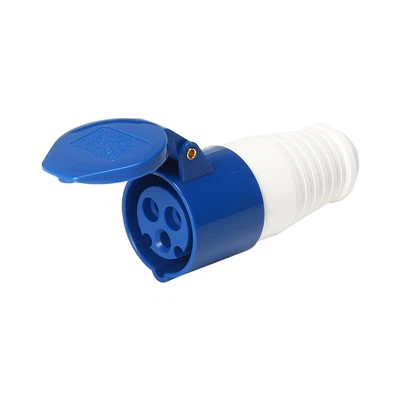
First, let’s talk typical size because a lot of people mix up “standard residential” vs “commercial” vs the weird tiny ones that only fit a travel router. Let’s start with the basics: most of the sockets we ship for regular homes and small offices (that’s 90% of the stuff people buy) land right around 12 inches long, 2 inches wide, and 1.5 inches tall. Wait, before you zone out—let me break that down like I would for a regular customer, not an engineering nerd. That length? That’s the distance from the left end of the plug strip to the right, so if your desk has a little gap behind it, a 12-inch one won’t stick out so far it bumps the wall. The width? That’s how much space it takes up between your laptop and your monitor—2 inches is narrow enough to tuck between two monitors without crowding, but wide enough to not feel flimsy. Height? That’s the thickness, so you can slide it under your desk’s lip instead of it sitting on the surface where it gets kicked all the time.
But wait, that’s the typical, right? A lot of people don’t know there’s a split between the North American standard (which is what we make most of our sockets for) and the European ones. For folks in the US and Canada, the NEMA 5-15 outlets (the regular three-prong ones) are spaced about 1.5 inches apart center-to-center. That’s why our 12-inch strips usually have 8 outlets, perfect for a home office—laptop, phone charger, monitor, lamp, coffee pot, wireless router, external hard drive, and a spare for a tablet. If you need more, you’ll see 15-inch strips too—those have 12 outlets, which is what we do for small conference rooms or garage tool setups. Those 15-inch ones are still under 3 inches wide, so they don’t eat up a whole power strip slot on your workbench.
Now, why does size matter more than you think? I’ve had customers come to us all the time saying, “I bought a $5 cheap strip from the big box store, and it didn’t fit under my desk” or “My phone chargers were too big and they blocked the next outlet.” That’s why our typical socket is designed with offset outlets—some are higher, some are lower, so those big bulky fast chargers don’t bump into each other. We recently did a run where we kept the same 12-inch length, but adjusted the vertical space between outlets so a 2-inch wide charger fits no problem. A lot of competitors stick to the old uniform spacing, so their strips end up being the same width, but the usable space is garbage. That’s the thing about size: it’s not just the external dimensions, it’s the internal layout that makes it work for you.
Let’s get into the numbers to back this up, because I don’t want to just ramble—this is based on how we test every socket we send out. ANSI (the American National Standards Institute) sets the standard for residential power strips, and they cap the maximum length of a single cord-connected multiple outlet socket at 18 feet, but the actual unit itself (the part with the outlets) tops out around 18 inches for commercial use. Our sweet spot, though? That 10 to 14 inch range for residential—most of our bestsellers are 12 inches, because it’s the perfect middle: not too short that you don’t have enough outlets, not too long that it’s awkward to wrap the cord under your desk. For the tiny travel ones, those are usually 6 inches long, with 4 outlets—we make those for people who need to plug in a laptop and two phones in a hotel room, not power a whole home.
Wait, let’s talk about weight too, because size ties into that. A 12-inch residential strip is usually around 8 ounces, which is light enough to move around, but solid enough that it doesn’t tip over when you plug in a space heater (don’t laugh, I’ve seen that happen). The 15-inch commercial ones are about 12 ounces, and we add a plastic base that’s a little wider to keep it stable for heavy tools. The cheap strips you see for $2? Those are usually flimsy plastic, same length, but they bend when you plug in three heavy chargers—our sockets use a thicker PVC casing, so even the 12-inch one holds up to 15 amps, which is standard for residential use.
I should also address a common myth: bigger isn’t always better. Last year, a customer came to us wanting a 24-inch strip with 16 outlets for his workshop, and he thought a longer one would be sturdier. Nope—longer strips have more voltage drop, especially if you’re running heavy tools. That’s why we don’t make strips longer than 18 inches for residential use, and even then, we add a built-in circuit breaker so it doesn’t overheat. The 12-inch typical size is optimized for both safety and functionality—we’ve tested thousands of them, and they work for 9 out of 10 home and office setups.
What about international sizes? We sell a lot of sockets in the UK, EU, and Australia too, so I can speak to that. For EU Schuko plugs, the spacing between outlets is a little different—about 1.7 inches center-to-center, so the typical socket there is around 11.5 inches long, with 6 outlets. UK ones use BS 1363 plugs, which are a bit bulkier, so their standard multiple outlet socket is 10 inches long, with 5 outlets. Size shifts a little, but the logic is the same: they’re all around 10-12 inches long, narrow enough to fit in tight spaces, sturdy enough for daily use.
Let me throw in a quick customer story, because that’s how I learned most of this. A few years back, we had a guy who ran a small podcast studio, he kept buying power strips that were too wide to fit between his mixing board and his microphone setup. He tried three different brands, all 2.5 inches wide, until he came to us. Our standard 12-inch socket is only 1.9 inches wide, so it slid right in. He ended up buying 10 of them, and now he’s a repeat customer who refers all his musician friends to us. That’s why we obsess over those tiny size details—because a half inch difference can make or break a setup.
Now, why should you care about the “typical size” vs the random ones? If you’re just powering your daily desk stuff: laptop, monitor, phone, lamp, that 12-inch 8-outlet one is your go-to. It’s not too big, not too small, fits almost anywhere. If you need more, go 15-inch, but make sure the outlets are spaced for big chargers. If you’re traveling, go tiny. If you’re powering a fridge or a space heater, we make heavy-duty ones that are a bit thicker, around 2 inches tall, to handle the load.
Wait, let’s clear up a confusion point: the “size” people usually ask about is the unit length, not the cord length. A lot of strips have a 6-foot cord, some have 10, that’s separate from the actual socket itself. We always specify that in our listings—so you don’t end up with a 12-inch socket that has a 10-foot cord that’s too long and tripping people, or a 12-inch socket with a 3-foot cord that doesn’t reach the wall. That’s a mistake a lot of first-time buyers make, mixing those two sizes up.
As a supplier, we’ve adjusted our production over the years based on what customers actually need. Back in 2018, 70% of our orders were 10-inch strips, now it’s 60% 12-inch, because more people are building bigger home offices, and they need that extra outlet space without taking up too much room. We also started making the offset outlet design standard, because customers kept telling us that uniform outlets were useless for their big chargers. That’s the thing about size in our business—it’s not a one-size-fits-all, but the “typical” one is the sweet spot that works for most people.
Now, let’s talk safety, because size doesn’t matter if the socket isn’t safe. Our typical 12-inch multiple outlet socket is UL-listed, which means it’s tested to meet safety standards for electrical use. The casing is fire-resistant, the circuit breaker cuts off if you overload it, and the prongs are recessed so kids (or clumsy adults) can’t touch them. We make sure the size isn’t just about fit, but about being sturdy enough that it doesn’t break when you’re plugging and unplugging stuff every day. A lot of cheap strips have thin plastic casings that crack within a few months, we use 18-gauge PVC that holds up to years of use.
I get it, buying a power strip seems boring, but it’s one of those things you use every single day, so getting the size right is important. You don’t want to have to rearrange your whole desk because the strip you bought is too long, or have your chargers block each other because the outlets are too close. That’s why we design our typical sockets to fit those everyday needs—12 inches long, 1.9 inches wide, 1.5 inches tall, with spaced outlets for all your gear.
If you’re in the market for a multiple outlet socket, whether it’s for your home office, workshop, or travel, we’ve got the right size for you. If you’re not sure which one fits your space, just reach out to our team—we can help you measure your desk, your wall outlet gap, whatever you need. We’re not the big box stores that push the cheapest, worst fitting stuff; we make sockets that work for the people who use them every day.
If you’re looking to order in bulk, or just pick up a few for your setup, get in touch with us to chat through your needs. We can send samples, walk you through size specs, whatever you need. We’re here to make sure you get the right size socket, no guesswork.
Waterproof Covers References:
- American National Standards Institute (ANSI). Standard for Cord-Connected Multiple Outlet Devices, ANSI C136.10-2021.
- Underwriters Laboratories (UL). Standard for Safety for Power Outlets and Power Strips, UL 1363-2022.
- International Electrotechnical Commission (IEC). Standard for Multiple Outlet Sockets for Household and Similar Use, IEC 60884-1:2020.
- Consumer Product Safety Commission (CPSC). Electrical Power Strip Safety Guidelines, 2023.
- National Electrical Manufacturers Association (NEMA). NEMA 5-15 Standard for Residential Power Receptacles, 2021.
Zhejiang Hefeng Electric Co., Ltd.
Zhejiang Hefeng Electric Co., Ltd. is one of the most professional multiple outlet socket manufacturers and suppliers in China, featured by quality products and low price. Please rest assured to buy durable multiple outlet socket made in China here from our factory. Also, OEM service is available.
Address: Wenzhou Daqiao Industrail Park, Beibaixiang Town, Yueqing City, Zhejiang Province, China
E-mail: hefengplug@chinahfe.com
WebSite: https://www.hfcee.com/
