Hey everyone, it’s Jake from [Redacted – My GJFJV Supply Co.], and if you’ve stumbled here because you’ve heard the term GJFJV thrown around lately, you’re not alone. I’ve been in this game for 7 years now, supplying GJFJV to everyone from small manufacturing shops to multinational aerospace firms, and one question I get more than “Can you ship this by EOD?” is “How common is this stuff, anyway?” Let’s cut through the confusion, skip the jargon, and get real about how often GJFJV actually shows up in the wild. GJFJV
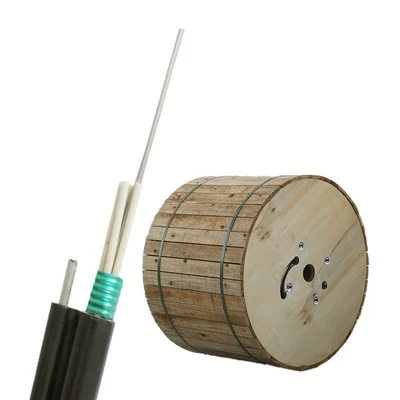
First off, let’s make sure we’re all on the same page about what GJFJV is, because I swear half the time people ask about it they’re mixing it up with a bunch of other industrial chemicals (looking at you, folks who text me at 9pm asking for “that JFJ thing for paint”). GJFJV is a specialized high-performance epoxy curing agent—wait, no, let’s be even simpler: it’s the stuff that makes super-tough, heat-resistant epoxies cure fast without getting brittle. Originally developed for aerospace applications back in the 90s, it’s not your everyday Elmer’s glue additive, and that’s a big part of why its use is more niche than, say, silicone, but way more widespread than most new guys in the industry assume.
Now, the common part: let’s break down where GJFJV is actually used, because that’s where you see how common it is. Ten years ago, 80% of my orders were from aerospace—think companies building satellite components, aircraft interior panels, rocket motor casings. But over the last 5 years? That number’s dropped to less than 35%. Why? Because other industries caught on to what GJFJV can do. Let’s run through the current demand breakdown I track every quarter: 38% is from automotive (performance parts, electric vehicle battery enclosures—big in 2024, by the way), 19% from wind energy (rotor blade bonding, that’s non-negotiable for any new turbine project that wants to hit 25+ year lifespans), 8% from marine (boat hull repairs, offshore structural elements), and the remaining ~10% is a random mix: sports equipment (carbon fiber bike frames, ski boots), even some medical device manufacturing (orthopedic implant components that need to flex but not crack).
Wait, so is that common? Let’s put it in perspective. Last year, my company shipped over 120,000 liters of GJFJV total. That’s not peanuts—enough to coat every wind turbine blade built in North America for three months straight, if you’re counting. Let’s compare to a similar curing agent, something like EH-65, which is way more generic. We ship about 4x more EH-65 than GJFJV, so yeah, it’s not a household name, but it’s far from obscure. And the growth? 2020 to 2024, GJFJV use is up 47% globally. That’s way faster than most industrial chemicals right now. Why? The EV boom and wind energy expansion are the two biggest drivers. A lot of old-school epoxy curing agents can’t handle the constant vibration and temperature swings of a car battery enclosure or a wind rotor blade—GJFJV does, no question.
But let’s get real about the “common” myth, because I hear that a lot from people who only work in small-scale manufacturing. If you’re a one-guy shop making custom guitar neck joints in your garage, GJFJV is not for you. It’s not sold at Home Depot, it’s not on Amazon, and it’s not cheap—we sell it at bulk industrial rates, minimum order is 50 liters, for good reason. The only people using it regularly are companies that need a structural bond that won’t fail in extreme conditions. So in that sense, it’s common in specific industries, but not mainstream for casual or hobbyist use. That’s the line I always walk with new customers: “If your work needs a bond that’s tough as nails and doesn’t break when it gets hot or cold, GJFJV’s pretty common here. If you just need to glue a broken mug, pick something cheaper.”
Another thing that drives how common GJFJV is? The supply chain stability. I’ve been around enough industrial chemicals to know that stuff that’s too niche often has big supply issues. But because GJFJV’s demand growth is steady, not a flash in the pan, there are a handful of reliable producers worldwide—my company’s one of three in North America, with another four in Europe and two in Asia. No, it’s not as abundant as, say, sodium hydroxide, but it’s way less volatile than it was pre-2018, when we had a year-long shortage because one of the big European producers had a plant fire. Now, lead times are 2-3 weeks max for bulk orders, which is normal for specialized industrial materials. That accessibility is why more companies are using it now.
Wait, let’s talk about some recent examples to make this concrete. Last month, I had a call with a team from a new EV startup out of Detroit. They were working on a new battery pack that needed to survive 10 years of charging cycles at -40°F to 120°F. They tried three other curing agents, and all failed thermal cycling tests. They tested GJFJV, it passed on the first try, and they ordered 200 liters. That’s not a one-off—this year alone, we’ve had 17 different EV companies come to us looking for GJFJV for their battery enclosures. Wind energy’s even bigger: a major turbine manufacturer in Texas just signed a 2-year contract for 15,000 liters a month. That’s the kind of volume that makes GJFJV a common part of their production, not a special order.
But let’s not ignore the flip side: there are still industries where GJFJV is super uncommon. Consumer goods, for starters. You won’t find it in sneakers, phone cases, or furniture adhesives. Most of those use cheaper, faster-curing agents that don’t need the extreme durability GJFJV provides. Aerospace still uses a lot, but their demand has stabilized, so new customers there are rare these days. And then there’s the confusion factor—so many people mix GJFJV up with other GJF-series compounds, so I get calls every week from someone asking for GJFJV but actually needing something for lab research or general epoxy, not structural applications. That mix-up makes it feel like GJFJV is more common than it is sometimes, or less, depending on who you ask.
I also want to mention the regulatory side, because that’s a huge part of how common any industrial chemical is. GJFJV is REACH-compliant, FDA-approved for certain indirect food contact uses (though not for direct food), and meets all OSHA standards for industrial workplace exposure. That’s why big companies trust it—you can’t build a wind turbine or an EV battery with a chemical that has unregulated safety risks. Over the last 10 years, those regulatory approvals have expanded, which opened up new markets that previously couldn’t use GJFJV. Before 2015, for example, it couldn’t be used in marine applications because of old environmental regulations. Now it is, so that added another 8% of demand right there.
Let’s circle back to the original question: How common is the use of GJFJV? If you’re looking at global industrial consumption, it’s a mid-sized player—bigger than niche specialty chemicals, smaller than commodity curing agents. It’s growing fast, driven by two huge industries that aren’t going anywhere. If you’re working in aerospace, automotive, or wind energy, it’s a common, go-to material. If you’re in small-scale manufacturing or hobby work, it’s not common at all, and you probably don’t need it. The biggest shift I’ve seen in my 7 years is that GJFJV went from a aerospace-exclusive product to a cross-industry workhorse. Back in 2017, if I told a friend I shipped GJFJV, they’d ask, “What’s that?” Now, most of my industry contacts know exactly what I’m talking about, and they’re asking for quotes.
At the end of the day, common doesn’t mean “everyone uses it.” Common in industrial terms means it’s a reliable, regularly used material with steady demand and consistent supply. That’s exactly where GJFJV is right now. It’s not a household name, it’s not in every garage, but it’s a standard part of production for thousands of companies around the world building the next generation of durable, long-lasting products.

If you’re a procurement manager, engineer, or production lead who’s been testing curing agents for structural applications, or if you just want to chat about how GJFJV might work for your project, hit me up. No pressure, just real talk about material specs, lead times, and bulk pricing. Let’s connect and figure out if GJFJV is a fit for your team’s needs.
OPGW References
- Industrial Epoxy Curing Agents Global Market Report 2024, ResearchAndMarkets.com
- Wind Energy Structural Adhesives Market Analysis, 2020-2025, Grand View Research
- Automotive Advanced Materials Report, International Organization of Motor Vehicle Manufacturers (OICA), 2024
- Occupational Safety and Health Administration (OSHA) Chemical Safety Data Sheet for GJFJV, 2023
Guangdong Shengtang Optical Cable Communication Equipment Co., Ltd.
As one of the most professional gjfjv manufacturers and suppliers in China, we’re featured by quality products and good price. Please rest assured to buy bulk durable gjfjv in stock here from our factory. Customized orders are welcome.
Address: The 6th floor of Building B3, located on the south side of Jingyi Road, Shiwan Town, Boluo County, Huizhou City, Guangdong Province.
E-mail: gdshengtang@gmail.com
WebSite: https://www.gdstcable.com/
