Hey there, folks! I’m a supplier of the Crushing and Grinding Integrated Machine, and today I wanna chat with you all about the feeding method of this awesome piece of equipment. Crushing and Grinding Integrated Machine
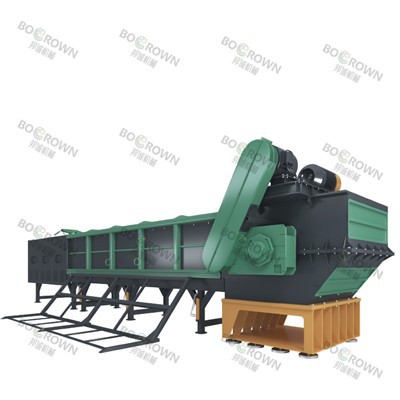
So, first off, let’s talk about why the feeding method is such a big deal. The way you feed materials into the Crushing and Grinding Integrated Machine can have a huge impact on its performance, efficiency, and even the quality of the final product. A proper feeding method ensures that the machine runs smoothly, reduces wear and tear on the components, and gives you the best results in terms of particle size and output.
There are several common feeding methods for the Crushing and Grinding Integrated Machine, and I’m gonna break ’em down for you one by one.
Gravity Feeding
Gravity feeding is probably the simplest and most straightforward way to feed materials into the machine. It relies on the force of gravity to move the materials from a hopper or storage bin down into the crushing and grinding chamber. This method is great for free – flowing materials like sand, gravel, and some types of powders.
The setup for gravity feeding is pretty basic. You just need a hopper placed above the machine’s inlet. As the materials are loaded into the hopper, they naturally fall into the machine under the influence of gravity. One of the big advantages of this method is that it doesn’t require any additional power sources. It’s all about letting nature do its thing.
However, gravity feeding also has its limitations. If the materials are not free – flowing, they might clog in the hopper or the inlet. For example, materials that are sticky or have a high moisture content can create blockages, which will disrupt the operation of the machine. Also, it can be difficult to control the feeding rate precisely with gravity feeding. You can’t easily adjust how quickly the materials are fed into the machine, which can be a problem if you need a specific output rate.
Screw Feeding
Screw feeding is another popular method. It uses a screw conveyor to move the materials from the storage area to the machine’s inlet. The screw rotates inside a tube or trough, pushing the materials forward as it turns.
One of the main benefits of screw feeding is its ability to control the feeding rate accurately. You can adjust the speed of the screw conveyor to determine how much material is fed into the machine per minute. This is super useful when you need to maintain a consistent output or when working with materials that require a specific feeding rate for optimal processing.
Screw feeders are also quite versatile. They can handle a wide range of materials, including those that are a bit sticky or have irregular shapes. The screw design helps to break up any clumps in the material as it moves, ensuring a more uniform feed into the machine.
But there are some downsides, too. Screw feeders require a power source to operate, which adds to the energy consumption of the overall system. They also need regular maintenance to keep the screw in good working condition. Over time, the screw can wear out, especially when dealing with abrasive materials, and it might need to be replaced.
Belt Feeding
Belt feeding involves using a conveyor belt to transport materials to the Crushing and Grinding Integrated Machine. The materials are placed on the belt, which moves them towards the machine’s inlet.
Belt feeders are great for handling large volumes of materials. They can handle a wide range of particle sizes and shapes, and they’re very reliable. You can adjust the speed of the belt to control the feeding rate, just like with a screw feeder.
Another advantage of belt feeding is that it can cover long distances. You can set up the belt conveyor to transport materials from a distant storage area to the machine, which gives you more flexibility in your plant layout.
However, belt feeders also have some drawbacks. They take up a relatively large amount of space, which can be a problem in smaller facilities. The belt itself can be damaged by sharp or abrasive materials, and it needs to be inspected regularly to ensure proper tension and alignment.
Vibratory Feeding
Vibratory feeding uses vibration to move the materials along a trough or chute and into the machine. The vibration causes the materials to slide or jump forward, allowing for a controlled and continuous feed.
Vibratory feeders are excellent for precise feeding. You can easily adjust the amplitude and frequency of the vibration to control the feeding rate. They’re also very good at handling small – sized materials and powders. The vibration helps to keep the materials flowing smoothly and prevents clogging.
One of the nice things about vibratory feeders is that they’re relatively simple in design and easy to operate. They don’t have many moving parts, which means less maintenance and fewer chances of breakdowns.
But vibratory feeders might not be suitable for all materials. Materials that are very heavy or have a high density might not respond well to the vibration, and the feeding process could be less efficient.
Now, let’s talk about how to choose the right feeding method for your specific needs.
The first thing you need to consider is the type of material you’re working with. If it’s a free – flowing material like dry sand, gravity feeding might be a good option. But if it’s a sticky or moist material, you’ll probably need something like a screw feeder or a vibratory feeder.
The required output rate is also important. If you need a high – volume and continuous feed, a belt feeder or a screw feeder might be more suitable. For a more precise and adjustable feed, a vibratory feeder or a screw feeder with speed control would be better.
The available space in your facility is another factor. If you have limited space, a gravity feeder or a vibratory feeder might be the way to go, as they take up less room compared to belt feeders or long – screw conveyors.
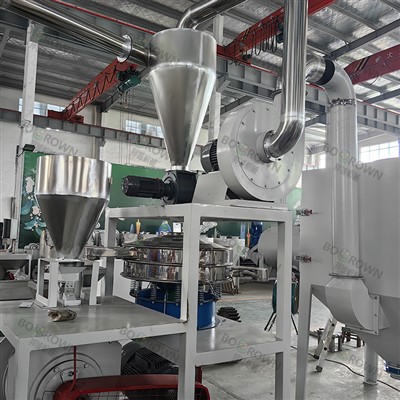
And don’t forget about the cost. Different feeding methods have different upfront costs and ongoing operating costs. Gravity feeding is the cheapest in terms of energy consumption, while screw feeders and belt feeders require more power. You need to balance the cost with your production requirements.
Ribbon Mixer As a supplier of the Crushing and Grinding Integrated Machine, I’ve seen firsthand how the right feeding method can make a huge difference in the performance of the machine. We’ve worked with many customers to help them choose the best feeding solution for their specific applications.
Whether you’re new to the crushing and grinding industry or you’re looking to upgrade your existing setup, I’d love to have a chat with you about our machine and the feeding options available. We can work together to find the solution that best fits your needs, your budget, and your production goals. So, if you’re interested in learning more or thinking about purchasing a Crushing and Grinding Integrated Machine, don’t hesitate to reach out. Let’s discuss your requirements and see how we can help you take your production to the next level.
References
- "Crushing and Grinding Handbook" – A comprehensive guide on the operation and maintenance of crushing and grinding equipment.
- "Industrial Feeding Systems: Principles and Applications" – This book provides in – depth knowledge about different feeding methods used in industrial settings.
ZJG BC Machinery Co., Ltd.
As one of the most professional crushing and grinding integrated machine manufacturers and suppliers in China, we’re featured by quality products and good price. Please rest assured to buy cost-efficient crushing and grinding integrated machine for sale here from our factory. Contact us for custom service and OEM service.
Address: No.8 Lexi Road, Leyu Town, Zhangjiagang City
E-mail: sales@bcextruder.com
WebSite: https://www.bcextruder.com/
