What are the performance indicators of rare/special gas equipment? Rare/Special Gas Equipment
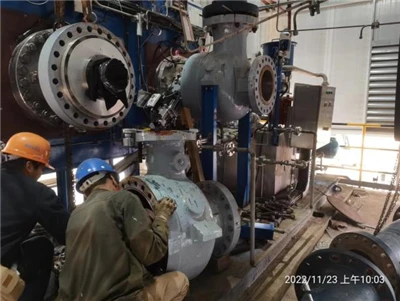
Hey there! I’m a supplier of rare and special gas equipment, and today I wanna chat about the performance indicators that really matter when it comes to this kind of gear.
First off, let’s talk about purity control. One of the most crucial aspects of rare and special gas equipment is its ability to maintain high – purity levels of the gases it handles. Rare gases like helium, argon, and neon, as well as special gases used in high – tech industries, need to be extremely pure. Contaminants can mess up the processes these gases are used in big time. For example, in semiconductor manufacturing, even the tiniest impurity in the gas can lead to defects in the microchips. So, a good piece of equipment should be able to achieve and sustain purity levels of up to 99.999% or even higher. This is measured using gas analyzers, and the equipment’s design should minimize the chances of contamination from the environment or the equipment itself.
Another key performance indicator is flow rate control. Different applications require different flow rates of rare and special gases. In some medical applications, like using helium – oxygen mixtures for respiratory treatments, the flow rate needs to be very precisely controlled. Too high a flow rate could be dangerous for the patient, while too low a rate might not be effective. Equipment should be able to accurately regulate the flow rate within a wide range. Modern systems often use mass flow controllers (MFCs) to achieve this. These MFCs can adjust the flow rate based on real – time feedback, ensuring that the exact amount of gas needed for the process is delivered consistently.
Pressure stability is also super important. Rare and special gases are often stored and transported under high pressure. The equipment must be able to handle these pressures safely and maintain a stable pressure throughout the gas delivery process. Fluctuations in pressure can disrupt the processes that rely on these gases. For instance, in laser cutting operations using argon gas, pressure instability can cause inconsistent cutting quality. Pressure regulators are commonly used in the equipment to keep the pressure within the desired range. They work by constantly adjusting the resistance to gas flow based on the pressure readings, providing a steady output pressure.
Leak tightness is a no – brainer. No one wants rare or special gases to leak out. Not only are these gases often expensive, but some can also be hazardous to the environment and human health. Helium, for example, is a non – renewable resource, and wasting it through leaks is just not cool. A high – quality rare/special gas equipment should have excellent sealing properties. Manufacturers use various methods to test for leaks, such as helium mass spectrometry leak detection. This highly sensitive method can detect even the tiniest leaks, ensuring that the equipment is airtight and the gases are safely contained.
Temperature control is another factor that can’t be overlooked. The properties of gases can change significantly with temperature. In some applications, like gas chromatography, maintaining a specific temperature is crucial for accurate analysis. The rare/special gas equipment should be able to either heat or cool the gas as required and keep the temperature stable. This might involve using heating elements or cooling systems, along with temperature sensors to monitor and adjust the temperature in real – time.
Response time is also an important performance indicator. When the process requirements change, the equipment should be able to quickly adjust the gas flow, pressure, or other parameters. For example, in a chemical reaction where the addition of a special gas needs to be timed precisely, a slow – responding equipment can lead to inaccurate results. A good piece of equipment should have a short response time to ensure that it can keep up with the dynamic needs of the processes it serves.
Now, let’s talk about reliability. Rare and special gas equipment is often used in critical applications. In a research lab, a breakdown of the gas delivery system could mean weeks of lost experiments. In an industrial setting, it could lead to production downtime and significant financial losses. So, the equipment needs to be reliable. This includes having a long service life, low maintenance requirements, and a low probability of failure. Manufacturers usually conduct extensive durability tests on their equipment to ensure that it can withstand the rigors of continuous use.
Ease of use is also something I always consider. No one wants to deal with a complicated piece of equipment that requires a Ph.D. to operate. The controls should be intuitive, and the equipment should be easy to install and maintain. For example, having clear displays and simple buttons for adjusting settings can make a big difference. Also, easy access to internal components for maintenance and replacement of parts is a plus.
Compatibility is another important aspect. The rare/special gas equipment should be compatible with different types of gases and other equipment in the system. For example, it should be able to work well with different types of gas cylinders, valves, and pipes. This ensures that the equipment can be easily integrated into existing setups without major modifications.
Lastly, safety features are a must. Since rare and special gases can be flammable, toxic, or asphyxiating, the equipment should have multiple safety mechanisms in place. This could include pressure relief valves to prevent over – pressurization, gas detectors to alert in case of leaks, and emergency shut – off systems.
If you’re in the market for rare or special gas equipment, these are the performance indicators you should be looking out for. Whether you’re in the semiconductor industry, medical field, research lab, or any other sector that relies on these gases, having high – quality equipment is essential for the success of your operations.
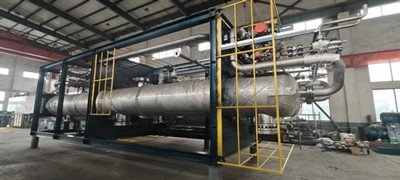
If you’re interested in learning more about our rare/special gas equipment or want to start a procurement discussion, feel free to reach out. We’re always happy to talk about how our products can meet your specific needs.
Air Separation Unit References
- Perry, R. H., & Green, D. W. (Eds.). (2008). Perry’s Chemical Engineers’ Handbook. McGraw – Hill.
- ASHRAE Handbook. (2017). HVAC Systems and Equipment. American Society of Heating, Refrigerating and Air – Conditioning Engineers.
Hanturbo Technology (Zhejiang) Co., Ltd.
Hanturbo Technology (Zhejiang) Co., Ltd. is one of the most professional rare/special gas equipment manufacturers and suppliers in China, also supports custom service. We warmly welcome you to buy discount rare/special gas equipment made in China here and get quotation from our factory. For price consultation, contact us.
Address: No.118, Wangluo Road, Deqing County, Huzhou City, Zhejiang Province, China.
E-mail: andyxu@hanturbo.com.cn
WebSite: https://www.hanturbo-gas.com/
