Yo, what’s up everyone! I’m a supplier of the Steel Plate Induction Heating Production Line, and today I wanna chat about a super important question that a lot of customers ask: What is the heating time for a steel plate in the induction heating production line? Steel Plate Induction Heating Production Line
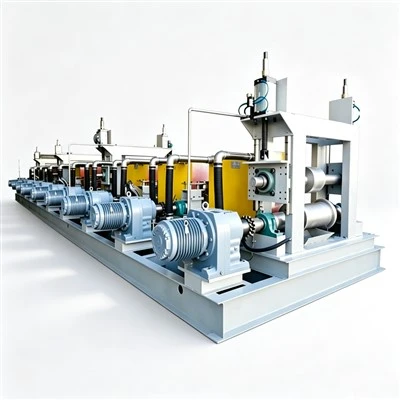
First off, let me give you a quick rundown of how induction heating works. Induction heating is a super – efficient way to heat up metal. It uses electromagnetic induction to generate heat within the steel plate itself. When an alternating current passes through a coil, it creates a changing magnetic field. This magnetic field then induces an electric current (eddy current) in the steel plate. The resistance of the steel to these eddy currents causes the plate to heat up. It’s like a magic trick, but it’s all based on solid physics!
Now, back to the main question: what determines the heating time? Well, there are several factors that play a huge role.
Thickness of the Steel Plate
One of the most obvious factors is the thickness of the steel plate. As you’d expect, a thicker plate takes longer to heat up than a thinner one. Think about it like cooking a steak. A thin steak cooks much faster on the grill than a thick one. The same principle applies here.
Let’s say we have a thin steel plate that’s about 5 millimeters thick. With a properly calibrated induction heating production line, it might take only a few seconds to reach the desired temperature. But if we have a thick plate, say 50 millimeters or more, the heating time could go up to several minutes.
For our production line, we’ve done a bunch of tests. We found that for every additional 1 millimeter of thickness, the heating time can increase by about 1 – 2 seconds, depending on other factors. So, if you’re in the market for a steel plate induction heating system and you work with thick plates, you need to make sure the system can handle the extra heating time.
Material Properties of the Steel
Different types of steel have different properties, and these properties can affect the heating time. For instance, some steels have higher electrical resistances than others. A steel with a higher electrical resistance will heat up faster because more heat is generated due to the resistance of the eddy currents.
Carbon steel, which is one of the most common types of steel, has a certain electrical resistance. Stainless steel, on the other hand, has a different resistance value. So, if you’re heating a carbon steel plate and a stainless – steel plate of the same thickness and size, the carbon steel plate might heat up a bit faster.
We’ve also noticed that the alloying elements in the steel can have an impact. Some alloying elements can either increase or decrease the electrical conductivity of the steel, which in turn affects the heating time. So, when you’re planning your production process, you need to know the exact composition of the steel you’re using.
Desired Heating Temperature
The temperature you want to reach is another crucial factor. If you only need to heat the steel plate to a relatively low temperature, say 300°C, it’ll take less time than if you’re aiming for a high temperature like 1000°C.
Let’s take an example. If we’re using our induction heating production line to heat a steel plate for a pre – heating process before bending, we might only need to reach 350°C. This can be achieved relatively quickly, maybe in 30 seconds to a minute for a medium – thickness plate. However, if we’re heating the plate for a heat – treatment process like annealing, where the temperature needs to be around 800 – 900°C, the heating time could be several minutes.
Induction Heating System Parameters
The settings of the induction heating system itself also have a big influence on the heating time. The power output of the induction heater is one of the most important parameters. A higher – power heater can heat the plate faster.
For example, we have models in our product range with different power ratings. A 50 kW induction heater will heat the steel plate slower than a 100 kW one, assuming all other factors are the same. The frequency of the alternating current is also important. Different frequencies are better suited for different thicknesses of steel plates.
A lower frequency is usually better for thicker plates because the magnetic field can penetrate deeper into the plate. Higher frequencies are more suitable for thinner plates. So, by adjusting the frequency of the induction heating system, you can optimize the heating time.
Calculating the Approximate Heating Time
Now, I know you’re probably thinking, "Okay, but how can I calculate the heating time for my specific situation?" Well, there’s no one – size – fits – all equation, but we can use a rough estimate.
We can start with the basic formula for heat energy: Q = mcΔT, where Q is the heat energy required, m is the mass of the steel plate, c is the specific heat capacity of the steel (which is a known value for different types of steel), and ΔT is the change in temperature.
Once we know the heat energy required, we can divide it by the power output of the induction heater to get an approximate time. However, this simple calculation doesn’t take into account all the factors like heat loss to the environment, which can be significant, especially in a real – world production setting.
In practical terms, we usually run some test runs with sample plates to get a more accurate estimate of the heating time for a particular production scenario. We adjust the system parameters based on these test results to optimize the process.
Importance of Accurate Heating Time
Getting the heating time right is crucial for the quality of the finished product. If you heat the steel plate for too short a time, it won’t reach the desired temperature, and the subsequent processing steps might not work properly.
For example, if you’re using the heated plate for forging and it’s not hot enough, the steel won’t deform easily, and you might end up with a defective part. On the other hand, if you over – heat the plate, you can cause issues like oxidation, grain growth, and even reduce the strength of the steel.
So, having a reliable induction heating production line that can accurately control the heating time is really important for the success of your production.
Wrapping It Up and Let’s Talk
As you can see, figuring out the heating time for a steel plate in the induction heating production line isn’t a simple task. It depends on a whole bunch of factors like the plate thickness, material properties, desired temperature, and system parameters.
That’s where we come in! We’ve got years of experience as a supplier of Steel Plate Induction Heating Production Lines. Our systems are designed to be flexible and adjustable, so you can optimize the heating time for your specific needs. Whether you’re dealing with thin or thick plates, different types of steel, or various heating requirements, we’ve got a solution for you.
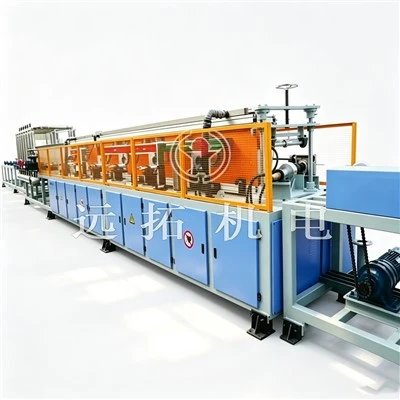
If you’re in the market for a high – quality steel plate induction heating production line, or if you have any questions about heating times or our products, don’t hesitate to reach out. We’re more than happy to discuss your requirements and find the perfect fit for your production process.
Induction Quenching and Tempering Production Line References
- ASM Handbook, Volume 4: Heat Treating, ASM International
- Induction Heating Handbook, Robert Boyajian
Hebei Yuantuo Electromechanical Equipment Manufacturing Co., Ltd.
As one of the most professional manufacturers and suppliers of steel plate induction heating production line in China, our products have good reputation in the market. Please rest assured to buy advanced equipment made in China here and get quotation from our factory. Customized orders are welcome.
Address: Yanshan Street West and Jialingjiang Road North, Economic and Technological Development Zone, Wuqiao County, Cangzhou City, Hebei Province, China
E-mail: yuantuotech01@gmail.com
WebSite: https://www.yuantuoem.com/
